
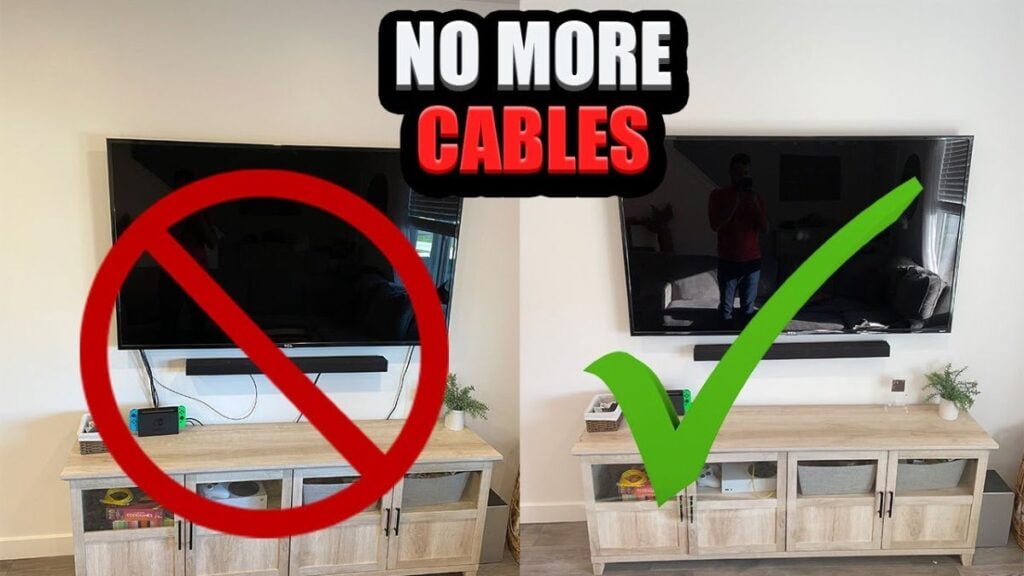

You know that feeling when you finally get your TV area looking just right? The TV is mounted, the console looks nice, maybe you even added a cute little plant or a candle nearby… and then there they are. The cords. Just hanging there like they were personally invited to ruin the whole setup.
It’s funny how something as small as a few cables can make the entire room feel unfinished. You could have the prettiest living room in the world, but if there are black cords dangling down the wall or tangled behind the TV stand, your eyes go straight to them. It’s one of those little things you don’t notice until you notice it—and then you can’t stop noticing it.
The good news is, hiding TV cords doesn’t have to be a huge project. You don’t need to tear open your walls, spend a fortune, or become some kind of home improvement expert overnight. There are plenty of simple ways to make your TV area look cleaner, neater, and more put together.
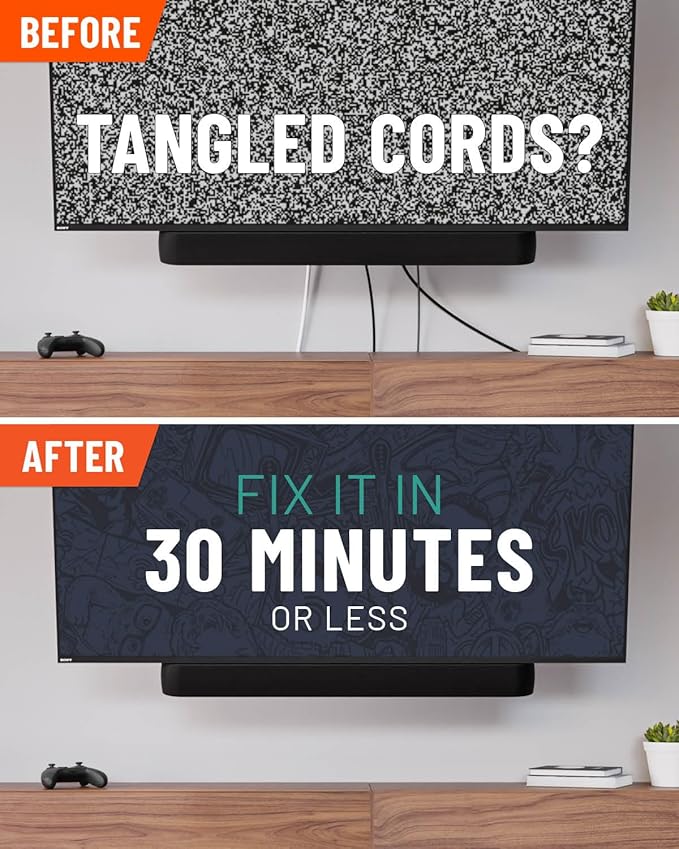
Some options are perfect for homeowners who want a permanent fix, while others are great if you’re renting and don’t want to damage the wall. Even a small change, like covering the cords or bundling them neatly, can make a big difference. So if your TV setup has been bothering you every time you walk into the room, these easy cord-hiding ideas can help make the whole space feel calmer and more polished.
As an Amazon Associate, I earn from qualifying purchases.
1. Use a Cord Cover for a Quick and Clean Fix
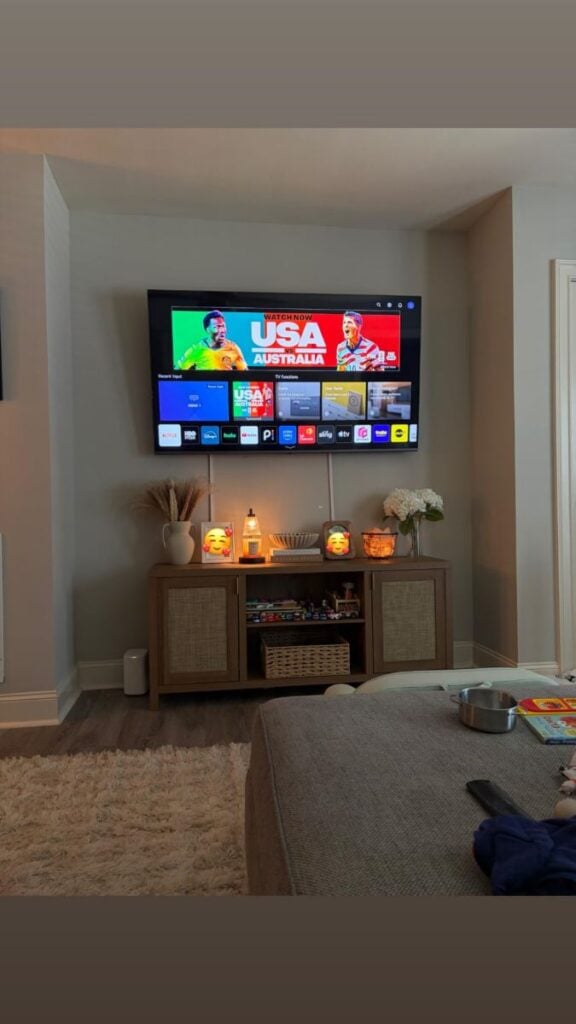
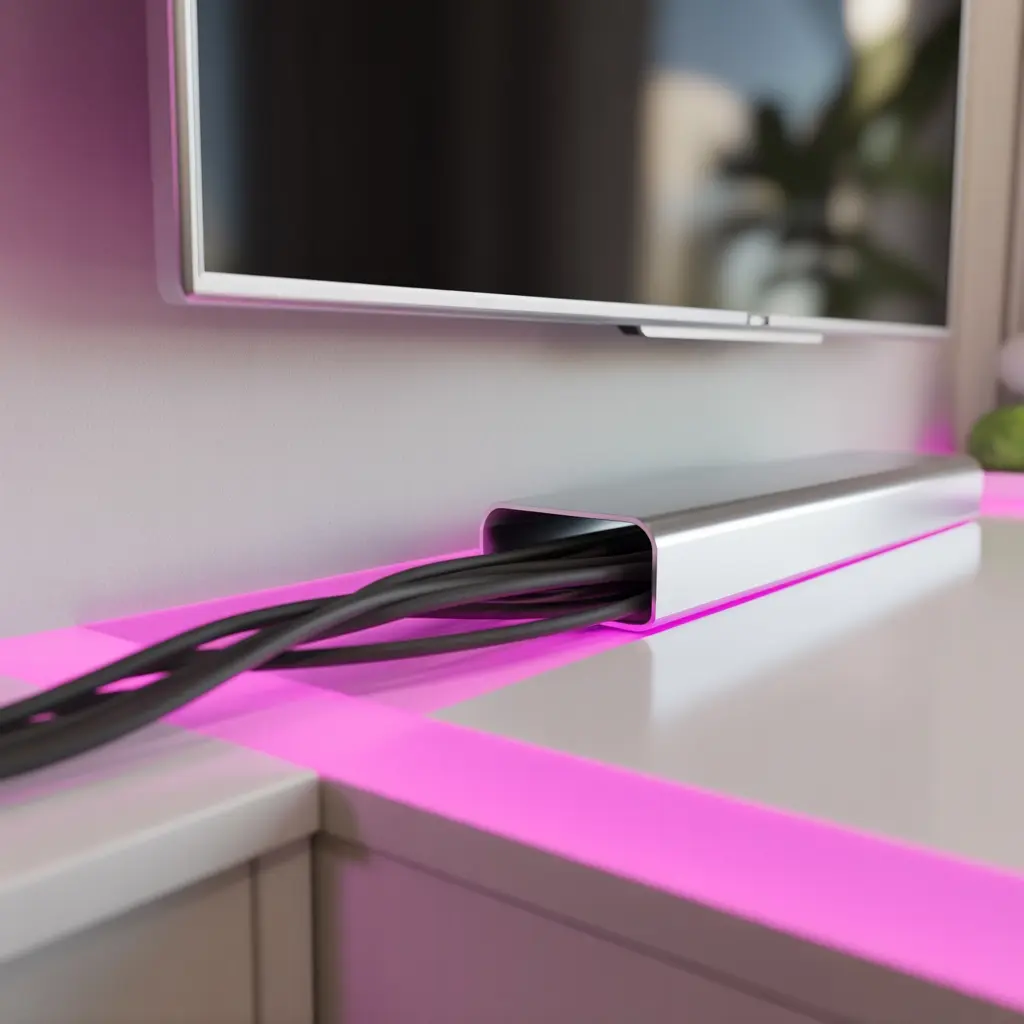
A cord cover is one of the easiest ways to hide TV cords without making things complicated. Think of it like a little tunnel that runs down your wall. You tuck the cords inside, close it up, and suddenly those messy dangling cables look much more organized. It’s simple, but it really does make the whole TV area feel cleaner.
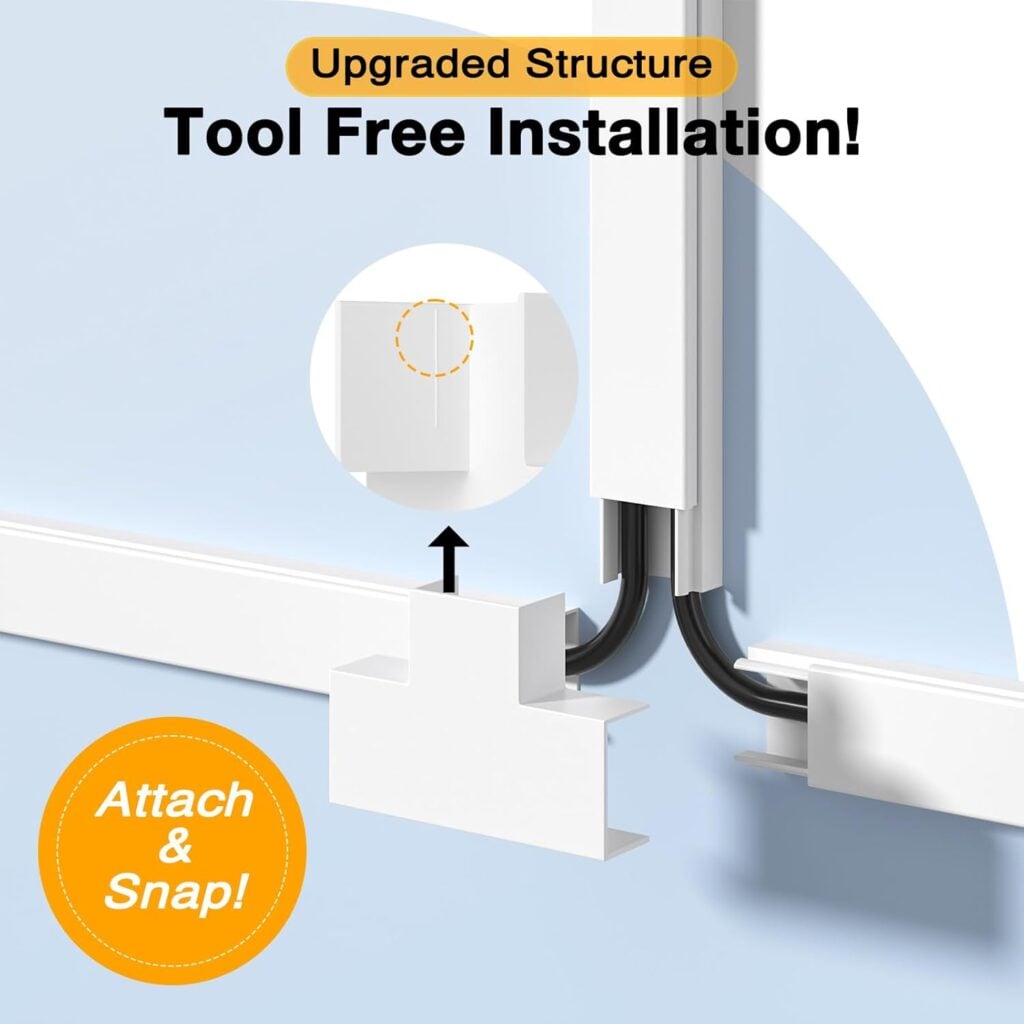
Most cord covers either stick to the wall with adhesive backing or can be screwed in for a more secure hold. Once it’s in place, your cords run neatly through the channel instead of hanging loose. This is especially helpful if your TV is mounted on the wall and the outlet is lower down, because that empty space between the TV and the console is usually where cords look the messiest.
The best part is that cord covers are beginner-friendly. You don’t need fancy tools, and you definitely don’t need to be handy to use one. In many cases, you can cut the cover to the length you need, attach it to the wall, place the cords inside, and be done pretty quickly. It’s one of those fixes that feels way more satisfying than it should.
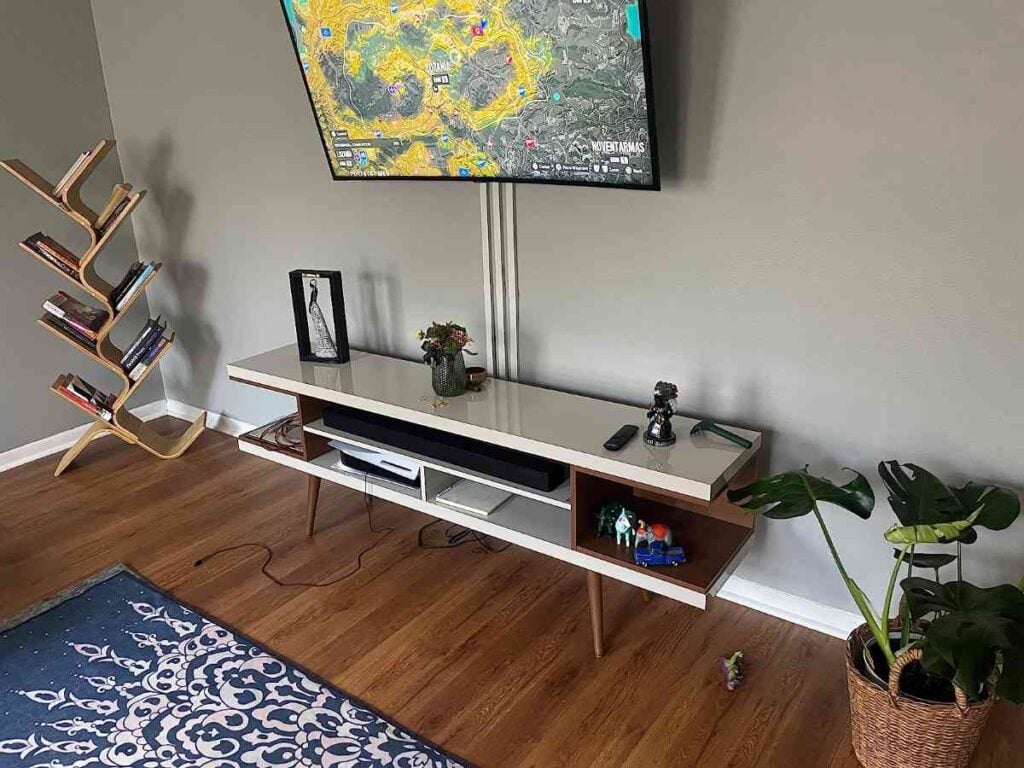
And here’s a little trick: paint the cord cover the same color as your wall. This helps it blend in instead of standing out like a white stripe running down the room. Once it matches the wall, most people won’t even notice it unless they’re really looking for it.
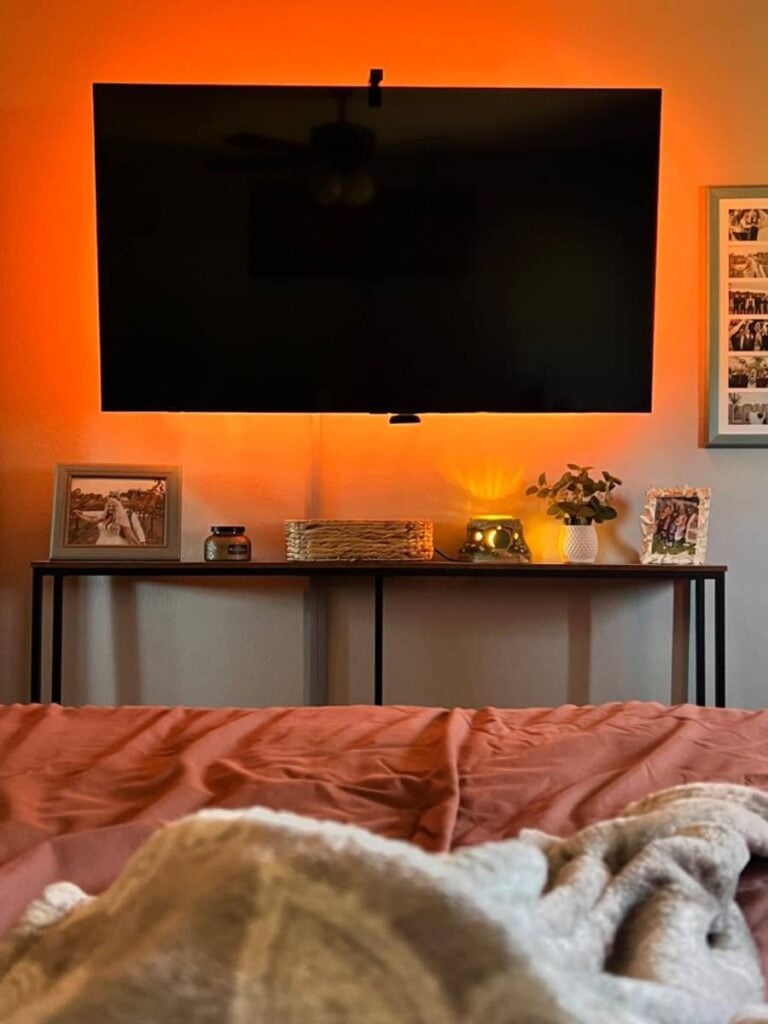
This is a great option for renters, apartments, dorms, or anyone who wants a fast solution without messing with electrical work. It may not be as invisible as running cords inside the wall, but for the amount of effort it takes, a cord cover gives you a much neater look with very little stress.
2. Hide Cords Behind the Wall for the Most Seamless Look
If you want that really clean, “wow, how is this TV even plugged in?” look, hiding the cords behind the wall is usually the best option. This is the method that makes everything look polished and professional, especially if your TV is mounted. Instead of seeing cords running down the wall, they disappear completely, and the whole setup feels much more intentional.
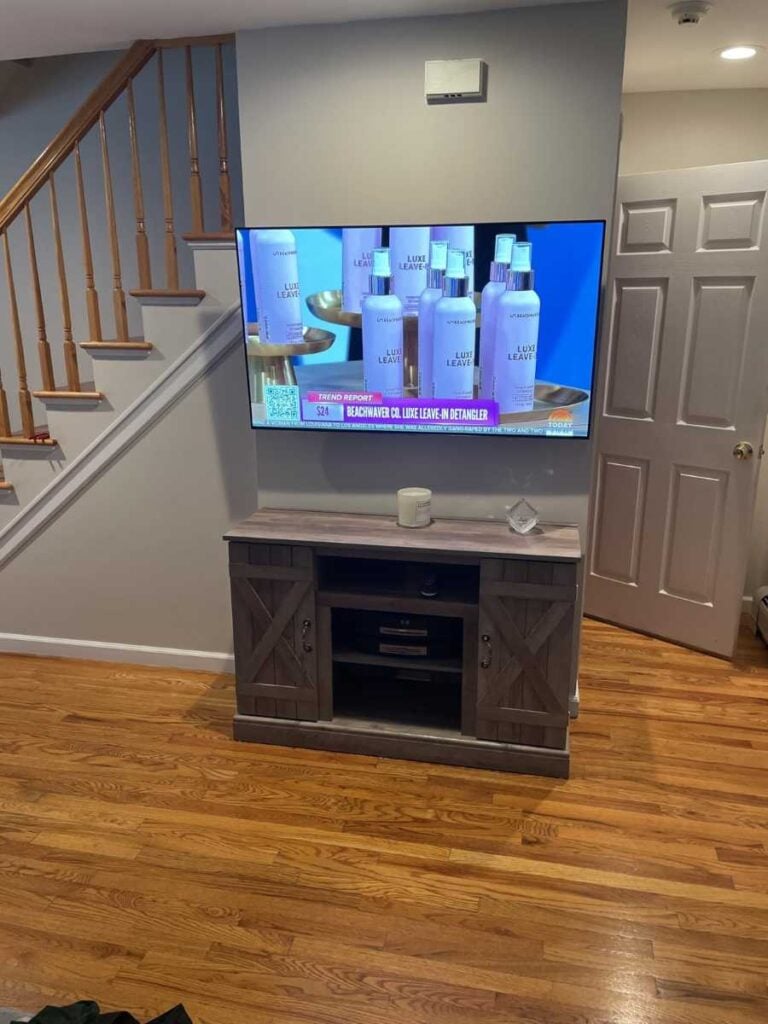
This works especially well in living rooms, bedrooms, and family rooms where the TV is the main focal point. When cords are visible, your eyes go right to them. But when they’re hidden, the TV almost looks like it belongs there naturally, like it was built into the room from the start. It’s a small detail, but it can make a big difference in how finished the space feels.
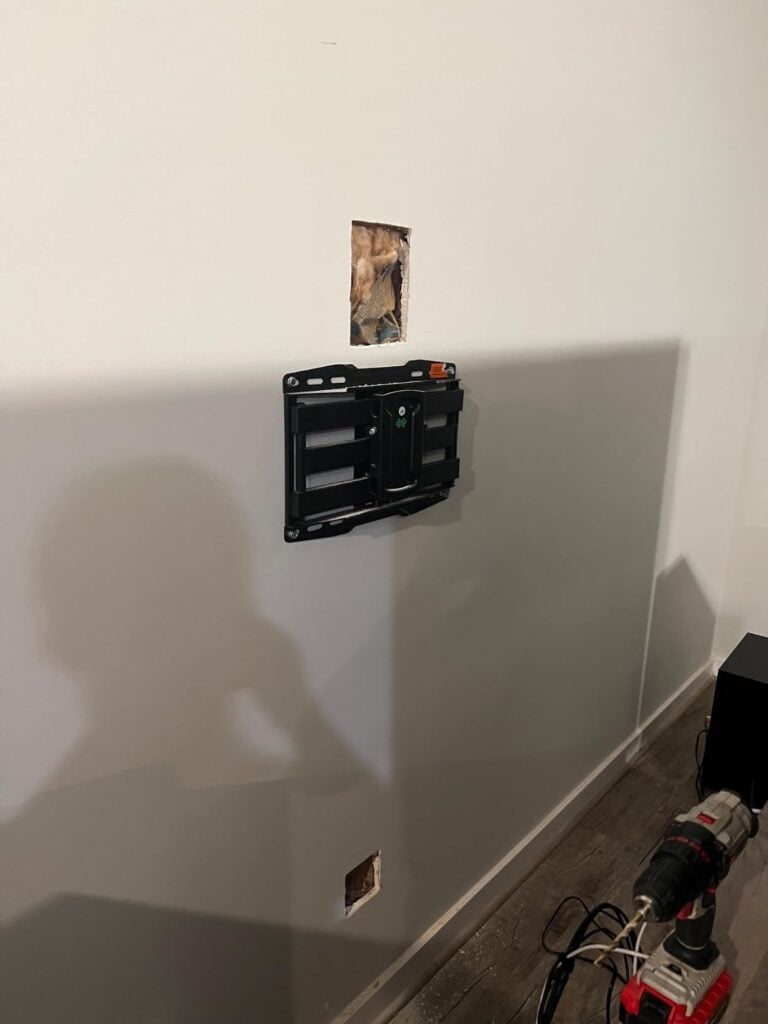
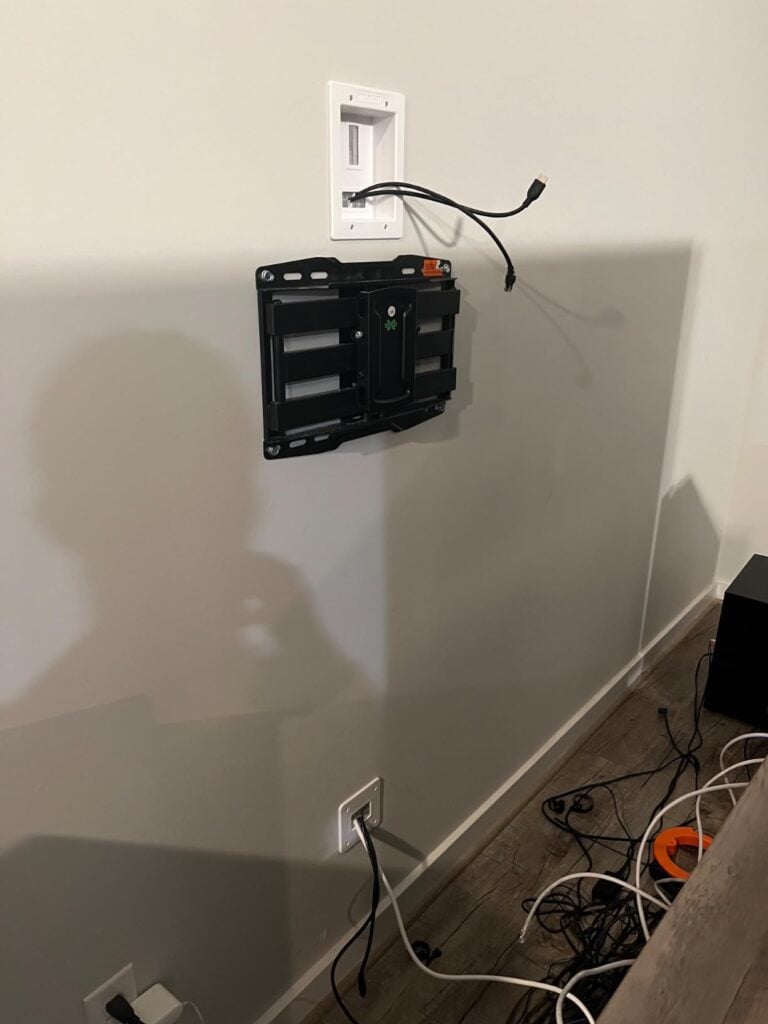
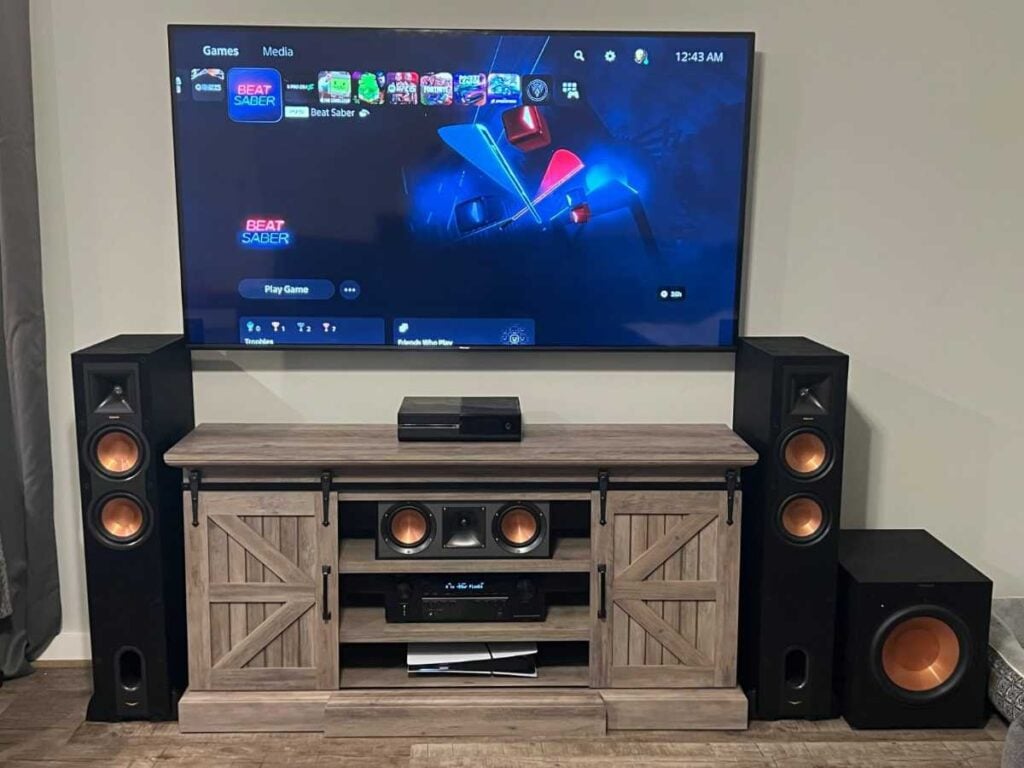
That said, this is the one method where you really do want to be careful. You should not just take a regular TV power cord and shove it behind the wall. I know it sounds like the easy fix, but it’s not the safe way to do it. If you want cords inside the wall, use a proper in-wall cable management kit that’s made for this purpose. These kits usually give you a safer way to route cables while keeping everything neat and hidden.
If you’re not comfortable cutting into drywall or dealing with anything electrical, it’s totally okay to call an electrician or a handyman. Honestly, sometimes paying someone to do it right is worth the peace of mind. You get the clean look without worrying that you accidentally did something unsafe behind the wall.
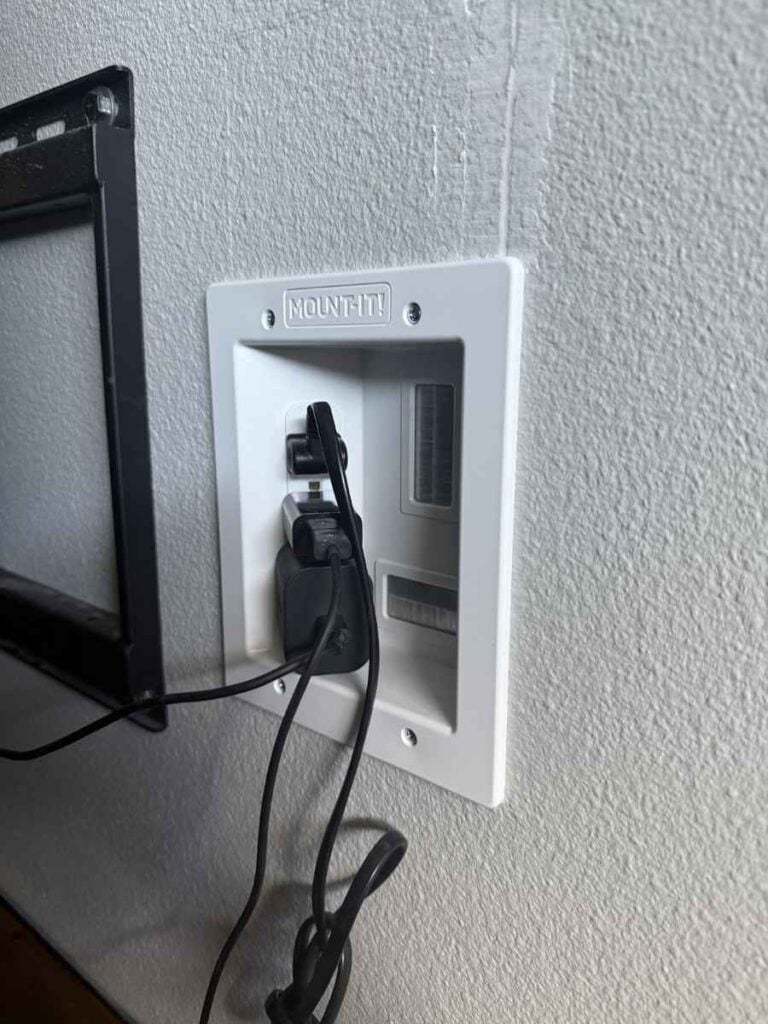
This option is best for homeowners or anyone who wants a more permanent, truly invisible cord setup. It takes more effort than a cord cover, but the final result is hard to beat. Once those cords are hidden, your TV area instantly looks cleaner, calmer, and much more high-end.
3. Use Furniture to Disguise the Cords
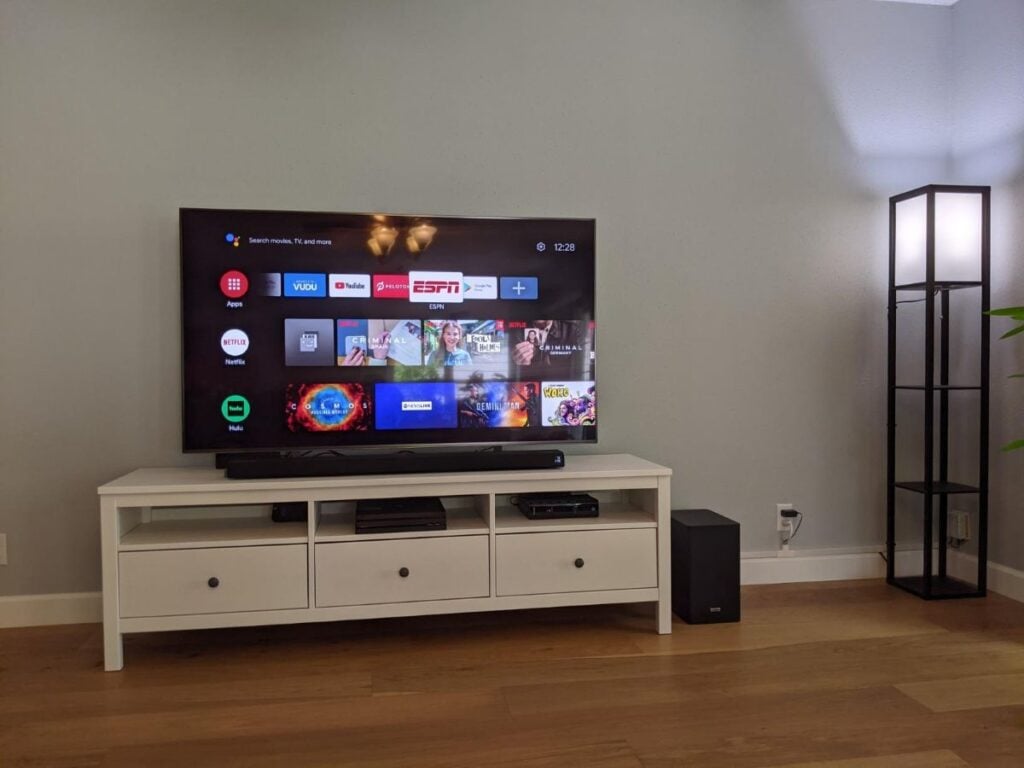
Not everyone wants to drill into the wall or deal with in-wall cord kits, and honestly, you don’t always need to. Sometimes the easiest way to hide TV cords is to let your furniture do the work for you. A TV console, cabinet, bookshelf, or media unit can cover a lot of the mess without making the project feel like a big home improvement job.
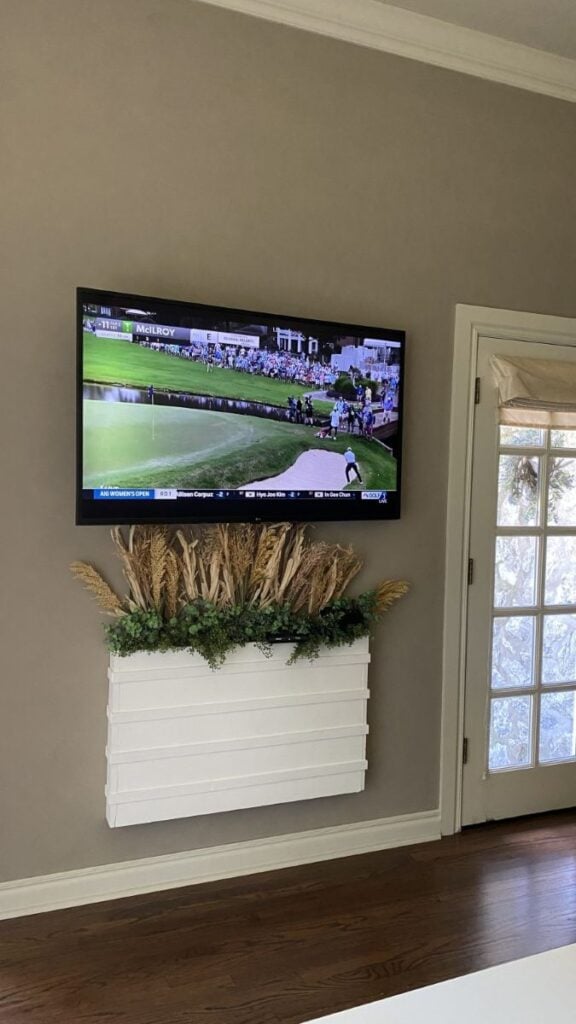
For example, if your outlet is low on the wall, placing a console right underneath the TV can instantly hide most of the cords. Instead of having cables dangling in open space, they fall behind the furniture where they’re much less noticeable. It’s simple, but it works surprisingly well. The TV area looks more grounded too, because the furniture gives everything a place to land visually.
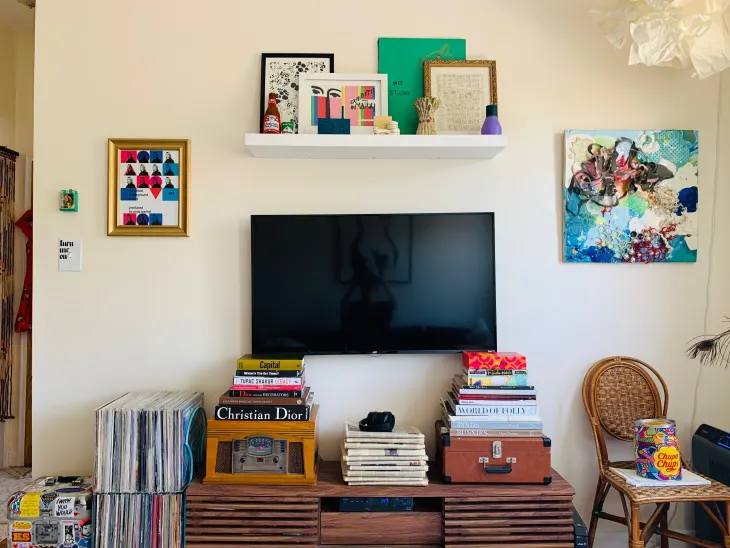
You can also use the inside of your furniture to keep things tidy. Baskets, decorative boxes, cable trays, and small bins are great for hiding extra cord length, power strips, remotes, chargers, and streaming devices. That way, you’re not just pushing the mess behind the console and pretending it isn’t there. You’re actually giving everything a home.
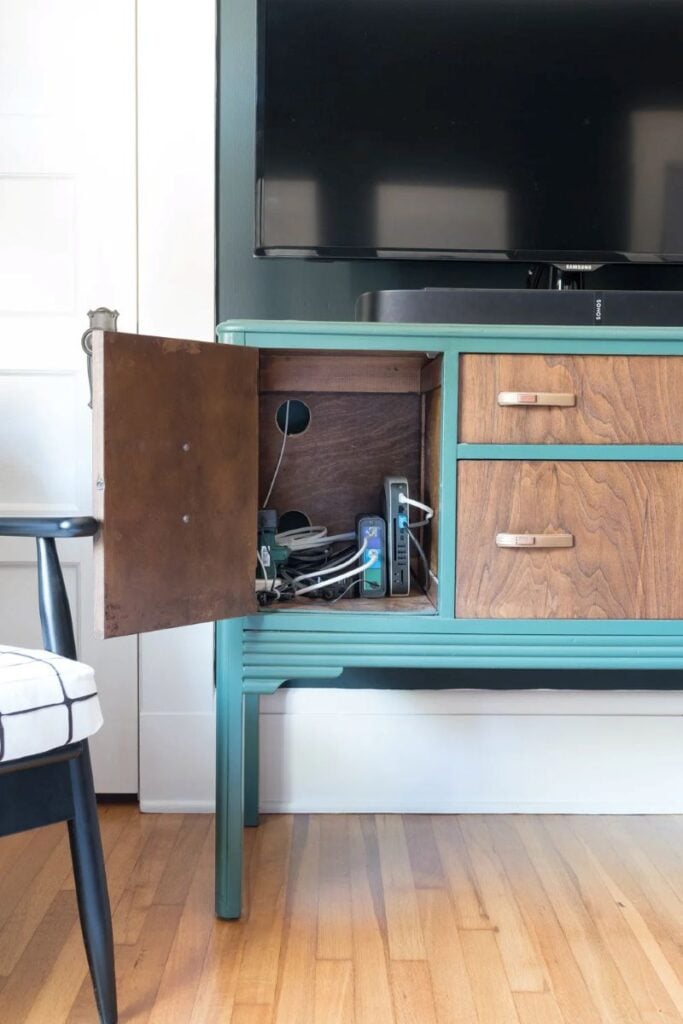
This is also a great trick if you like your space to feel cozy and decorated. A pretty cabinet, a few books, a basket, or a plant can make the whole setup look intentional instead of like you’re trying to cover up a cord problem. The cords are still there, of course, but they’re not stealing all the attention anymore.
This method is perfect for renters, apartment dwellers, or anyone who doesn’t want to make holes in the wall. It’s low-stress, budget-friendly, and easy to change later if you move things around. Sometimes the best fix isn’t the fanciest one. It’s just using what you already have in a smarter way.
4. Bundle and Tie Cords Together So They Look Neater
Sometimes you can’t completely hide every cord, and that’s okay. Even just making them look more organized can make a huge difference. A bunch of loose cords hanging in different directions always looks messy, but when you bundle them together, they suddenly feel much more controlled and less distracting.
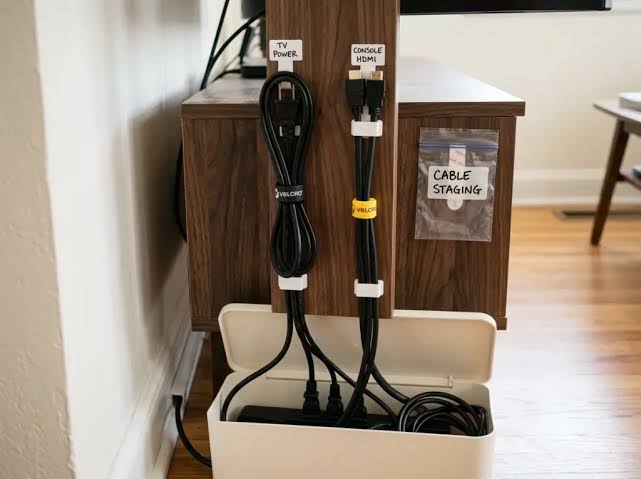
Think of it like gathering messy hair into a ponytail. It may not make the cords disappear, but it instantly makes everything look neater. Instead of seeing five or six separate cables behind your TV stand, you see one tidy bundle. That alone can make your TV area feel less chaotic.
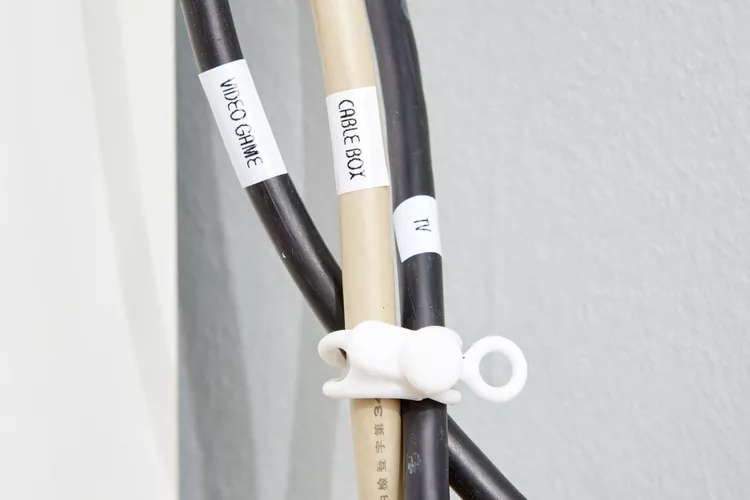
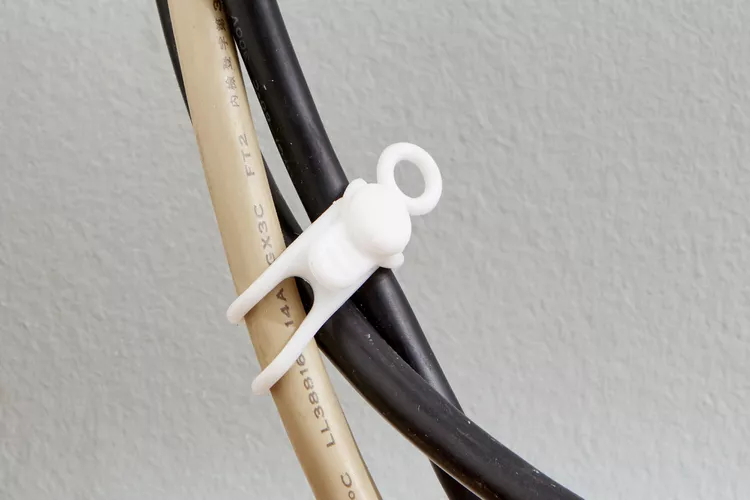
You can use Velcro ties, zip ties, cable sleeves, or cord wraps for this. Velcro ties are especially nice because you can easily undo them if you need to move something later. Zip ties work too, but they’re more permanent, so they’re better if you know your setup won’t change anytime soon. Cable sleeves are great if you want the cords to look like one clean line instead of a bunch of separate wires.
If you have several devices connected to your TV, labeling the cords is a lifesaver. You don’t need anything fancy. A small sticker, a piece of masking tape, or a little label that says “TV,” “soundbar,” “router,” or “game console” can save you so much frustration later. Because we’ve all had that moment where we unplug the wrong thing and suddenly the Wi-Fi or streaming box stops working.
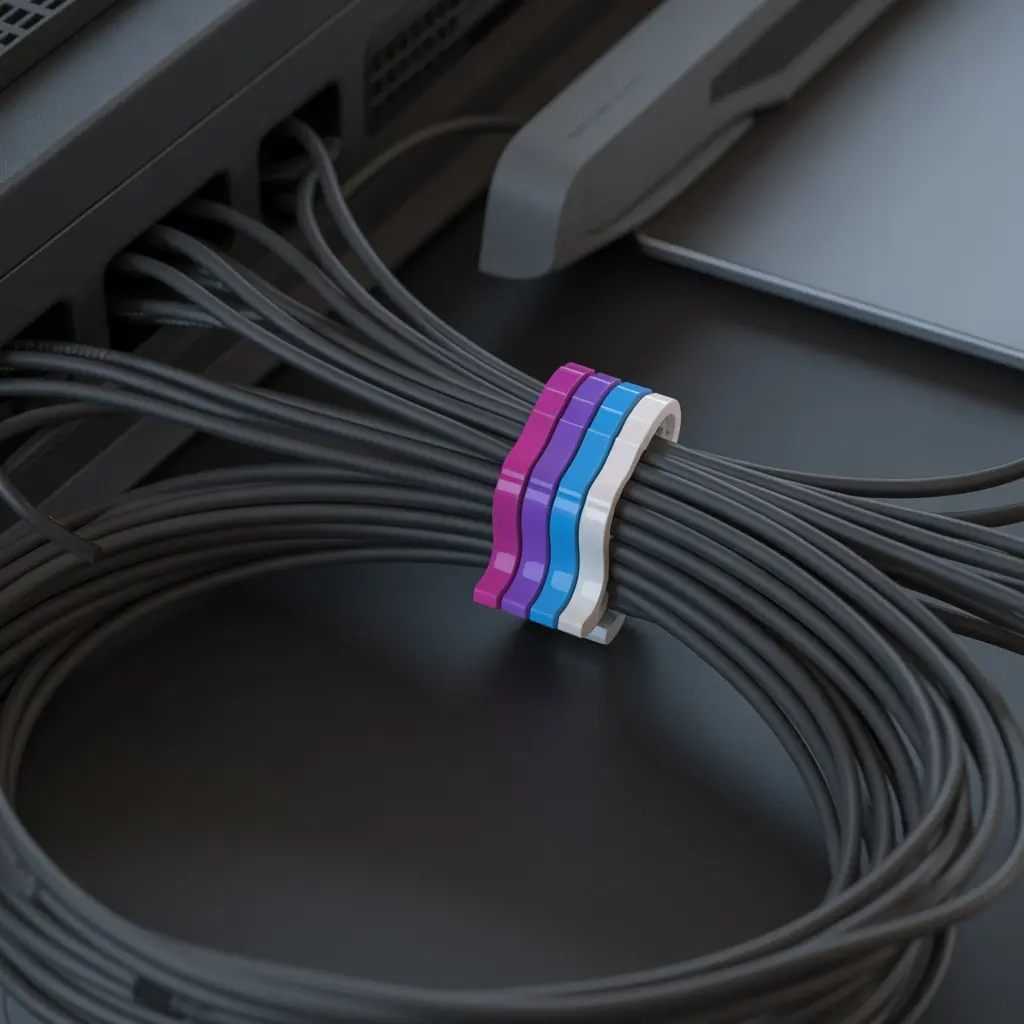
Bundling also helps prevent that awful cord nest behind the console. You know the one. The tangled mess where every cable seems to have wrapped itself around another cable for no reason. Keeping cords tied together makes it easier to clean, move furniture, and unplug only what you actually need.
This method is especially helpful if you have a busy entertainment center with a streaming box, speakers, game console, router, or soundbar. Even if the cords aren’t completely hidden, they’ll look much more intentional. And sometimes that’s all you need to make the whole area feel calmer and more put together.
5. Use a Cable Management Box to Hide Power Strips
A lot of the mess around the TV doesn’t actually come from the TV cord itself. It comes from the power strip, the extra cable length, and all those chunky plugs sitting on the floor or shoved behind the stand. You know how it goes. One TV cord turns into a streaming device, then a soundbar, then a game console, then a charger, and suddenly the corner looks like a little cord jungle.
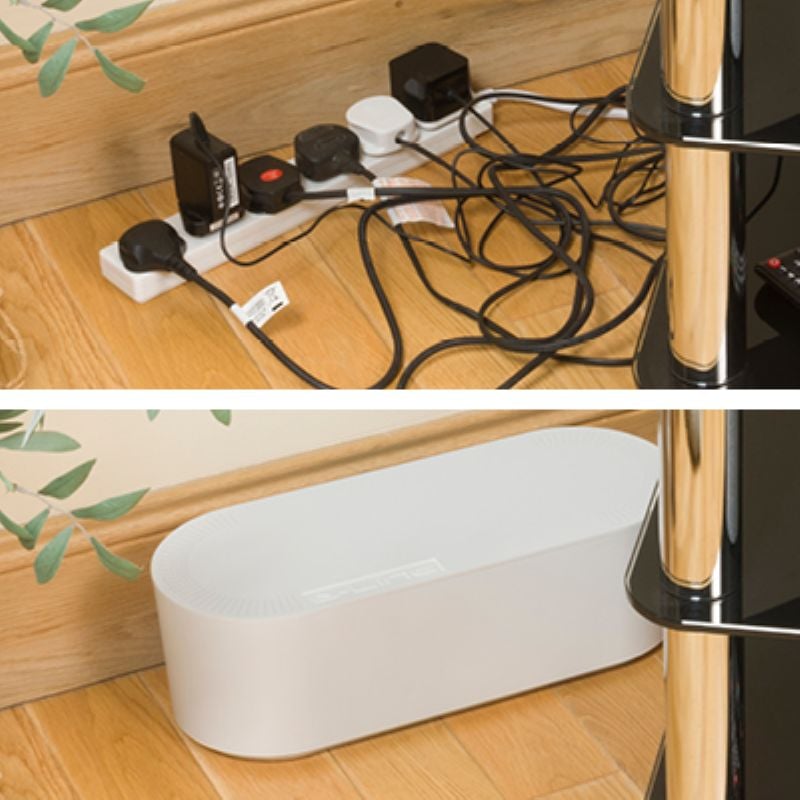
That’s where a cable management box can be such a simple fix. It’s basically a neat-looking box that hides your power strip, plugs, and extra wires all in one place. Instead of seeing a bunch of cords piled up on the floor, you see one clean box. It makes the area look instantly tidier without needing to drill, paint, or rearrange the whole room.
These boxes usually have openings on the sides so cords can run in and out easily. You place the power strip inside, plug everything in, tuck the extra cord length into the box, and close the lid. It’s one of those little organizing tools that makes you wonder why you didn’t try it sooner.
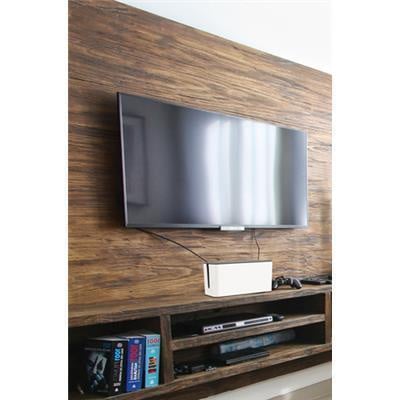
The nice thing is that cable management boxes come in different styles, colors, and finishes now. Some are simple white or black, while others have a wood-look lid or a more decorative design. So instead of looking like a random plastic box on the floor, it can actually blend in with your TV stand, flooring, or room decor.
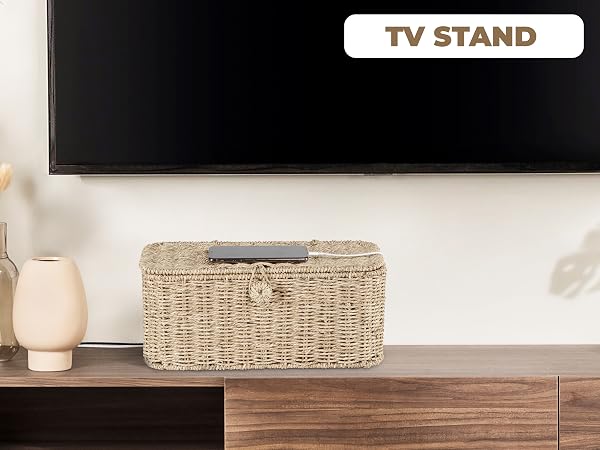
A good place to put one is behind the TV stand, under the console, or off to the side where it’s still easy to reach. You don’t want it buried so deep that you have to move all the furniture every time you need to unplug something. The goal is to hide the mess while still keeping things practical.
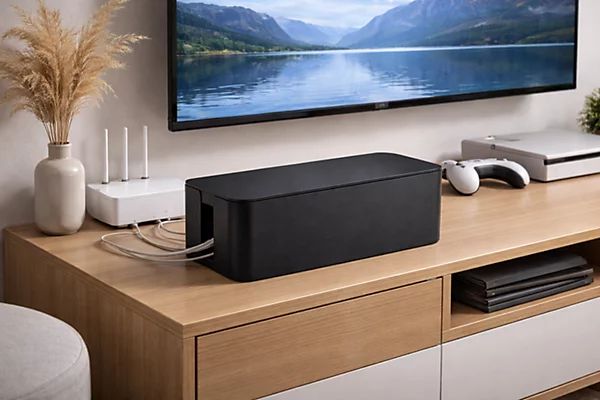
This option is perfect for homes with several plugged-in devices near the TV. It’s also great if you’re tired of seeing a power strip sitting out in the open. Once everything is tucked inside the box, the TV area feels cleaner, safer, and much easier on the eyes.
6. Route Cords Along Baseboards or Behind Trim
Here’s something a lot of people forget: cords don’t always have to run straight down the wall. Sometimes that straight line is exactly what makes them so noticeable. Your eyes catch it immediately because it looks out of place, especially if the cord is dark and the wall is light.
A better trick is to guide the cords along the natural lines of the room. For example, you can run them along the baseboard, behind a piece of trim, or along the back edge of a TV console or bookshelf. Instead of cutting across open wall space, the cords follow places where your eyes already expect to see lines and shadows. That alone makes them much easier to ignore.
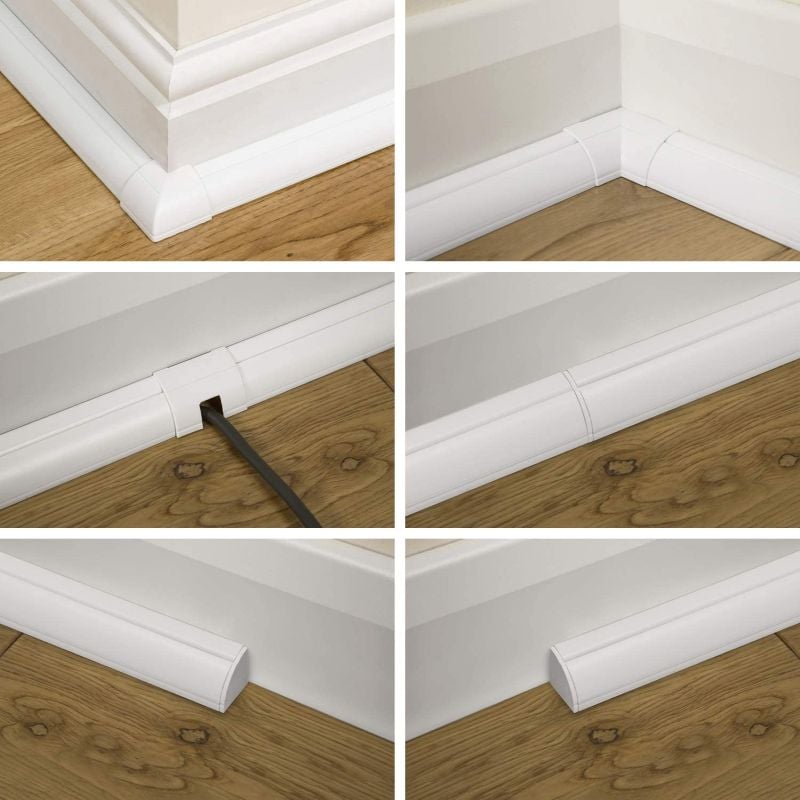
Adhesive clips can help a lot with this. They’re small, easy to use, and usually don’t require drilling. You just stick them where you want the cord to go, then snap or slide the cord into place. Small cord channels work too, especially if you want the cords to look more polished. Some even come in colors that blend in with your wall or baseboards.
This is a great option if your outlet isn’t directly behind the TV. Maybe it’s a few feet to the side, or maybe your furniture setup makes the cord path a little awkward. Instead of letting the cord stretch across the floor or hang in a weird angle, you can guide it neatly along the edge of the room until it reaches the outlet.
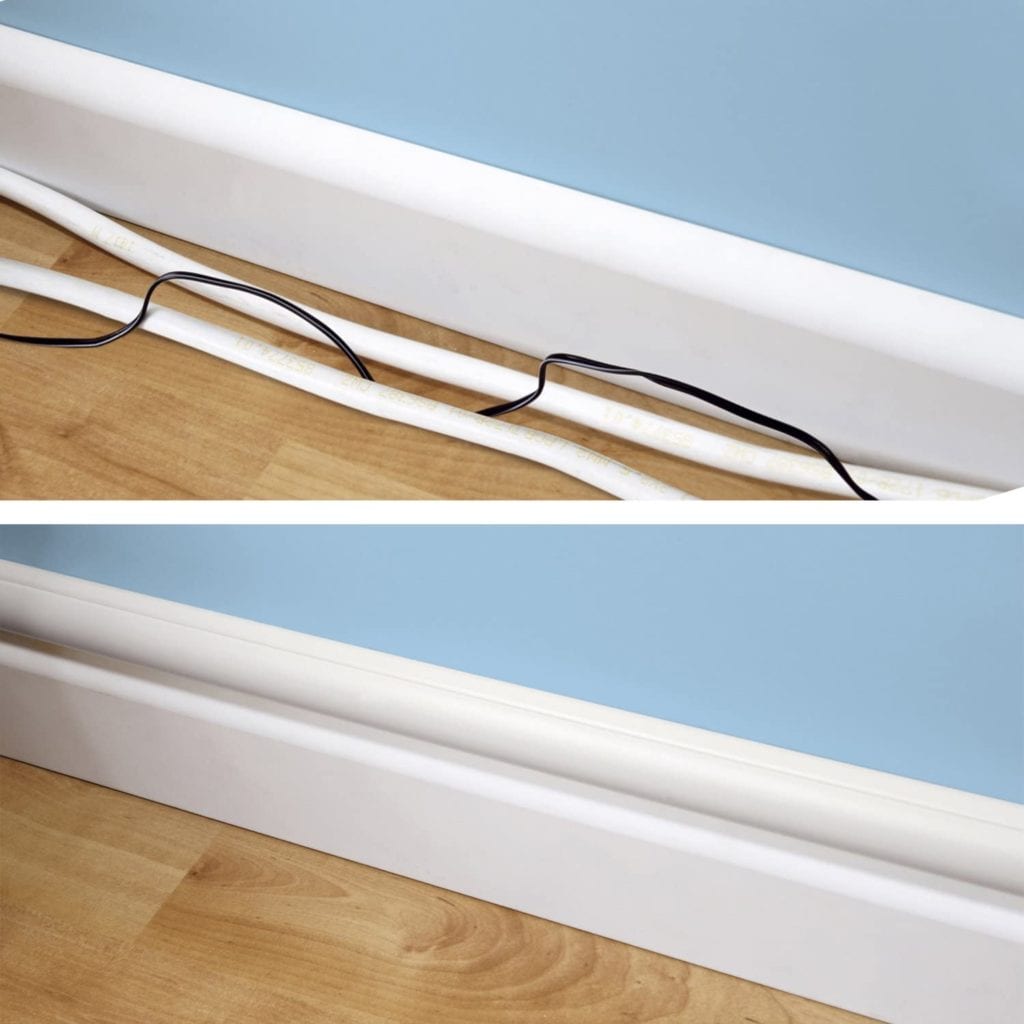
And honestly, this is one of those fixes that feels small but makes the whole area look more thought-out. The cords may not be completely invisible, but they’re no longer shouting for attention. They sort of disappear into the background, which is really the goal.
This method is especially helpful for renters or anyone who wants a subtle, low-cost solution. You don’t have to open the wall, buy a new TV stand, or do anything permanent. You’re just being a little smarter about where the cords travel, and sometimes that’s enough to make the whole setup feel cleaner.
7. Choose Wireless or Low-Cord Devices When Possible
Sometimes the best way to hide cords is to have fewer cords in the first place. I know that sounds obvious, but it’s easy to forget how many things we slowly add to the TV area over time. One streaming box here, one speaker there, an old DVD player we never use, a charger that somehow ended up behind the console… and suddenly the whole area is packed with wires.
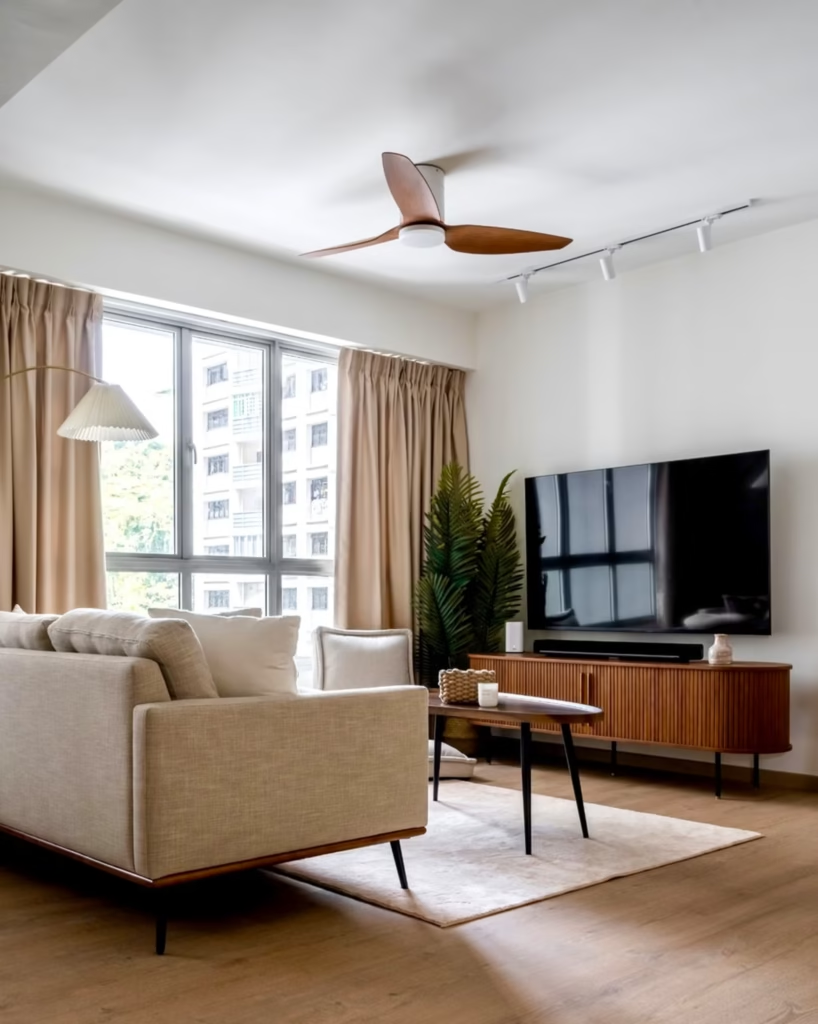
So before you start hiding everything, take a minute to look at what’s actually plugged in. Are you still using every device? Is there an old cable box, game console, speaker, or extra charger that hasn’t been touched in months? If something is just sitting there collecting dust, removing it can instantly make the space feel lighter and less cluttered.
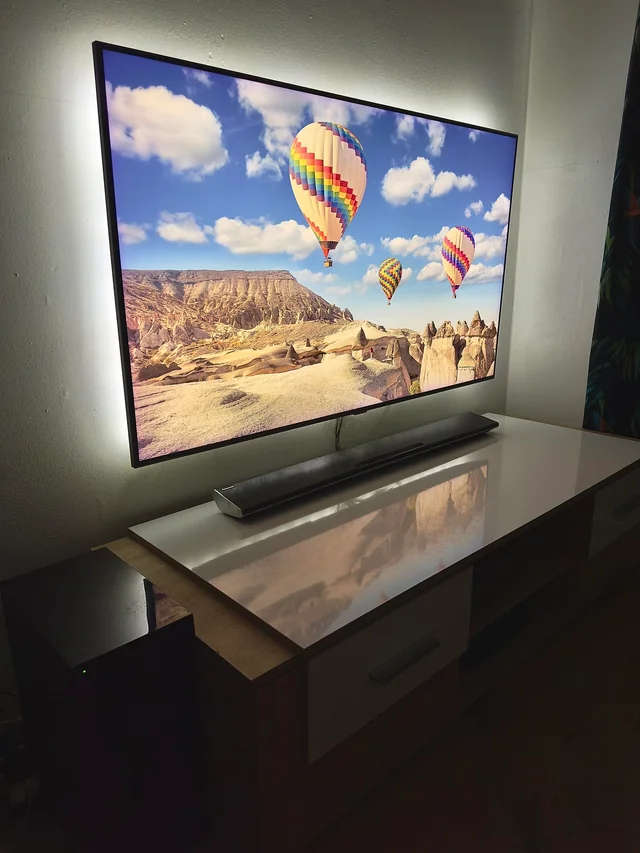
You can also choose devices that naturally cut down on cords. Smart TVs are helpful because many apps are already built in, so you may not need a separate streaming device. Streaming sticks are usually smaller and neater than bulky boxes. Wireless soundbars, Bluetooth speakers, and rechargeable remotes or accessories can also reduce the number of cables around your TV stand.
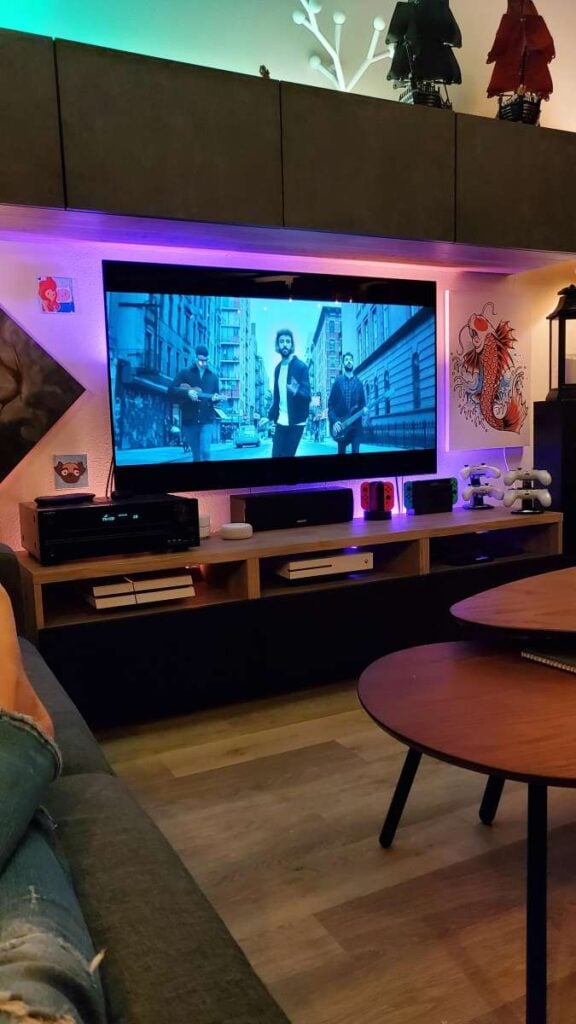
Of course, “wireless” doesn’t always mean completely cord-free. A wireless soundbar may still need power, and a smart TV still needs to be plugged in. But even reducing two or three extra cords can make cable management so much easier. There’s a big difference between hiding one or two cords and trying to wrangle a whole pile of them.
This is also a good chance to simplify your setup. Keep only what you actually use and enjoy. The fewer devices you have, the fewer cords you have to hide, bundle, label, or untangle later. It makes cleaning easier too, because there’s less stuff behind the TV stand gathering dust.
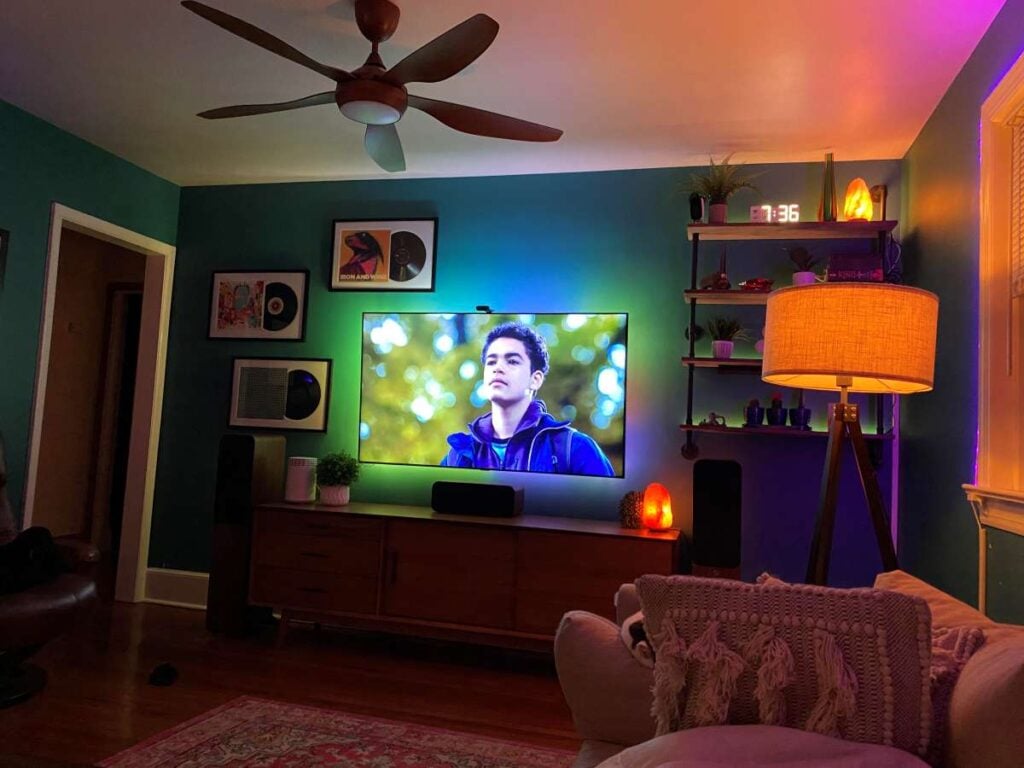
This option is best for anyone who wants a cleaner entertainment area with less visual clutter overall. You don’t have to replace everything at once. Just start by removing what you no longer use, then choose lower-cord options whenever you upgrade. Little by little, your TV area will feel neater, calmer, and much easier to live with.
Bonus Tips for Making TV Cords Less Noticeable
Once you’ve handled the main cord mess, a few small details can make your TV area look even cleaner. These little finishing touches may not seem like much at first, but they can be the difference between “that looks better” and “wow, that looks really put together.”
One easy trick is to match your cord covers or cable sleeves to the wall color. If your wall is white, a white cord cover may already blend in nicely. But if your wall is gray, beige, green, or another color, painting the cord cover to match can make it almost disappear. It’s such a simple thing, but it keeps the cord cover from looking like a random strip stuck to the wall.
You also want to keep cords as short as possible without pulling them too tight. Extra-long cords tend to bunch up behind the TV stand or spill out where you can see them. But cords that are stretched too tightly can get damaged or come loose. The sweet spot is having just enough length so everything reaches comfortably, with the extra tucked away neatly.
Labels are another small thing you’ll be grateful for later. When you have a TV, soundbar, streaming device, router, lamp, and maybe a game console all plugged in, it can be hard to know which cord belongs to what. A tiny label near the plug can save you from unplugging the wrong thing and wondering why the internet suddenly stopped working.
It’s also smart to avoid overcrowding one outlet. I know it’s tempting to plug everything into one power strip and call it a day, but too many cords in one spot can look messy and may not be safe. Spread things out when you can, and use a good-quality power strip if you need one.
And before you call the project done, take one last look at the cord paths. Make sure nothing is pinched behind furniture, bent too sharply, or stretched across a walkway where someone could trip. The goal is not just to make the area prettier. It should be safer and easier to live with too.
If possible, keep power strips off the floor. Mounting them to the back of a TV stand, placing them inside a cable box, or tucking them onto a shelf can instantly make the whole setup feel cleaner. Plus, it makes vacuuming and dusting so much easier.
Common Mistakes to Avoid
When you’re trying to hide TV cords, it’s easy to focus only on making everything look pretty. And of course, that’s the fun part. But a few common mistakes can make the setup look messy again or even create problems later. So it’s worth taking a minute to avoid them.
One of the biggest mistakes is letting cords hang straight down from a mounted TV. This is probably the most noticeable cord problem because the TV is usually right at eye level. Even if the rest of the room looks beautiful, those dangling cords can make the whole wall feel unfinished. A cord cover, in-wall kit, or even smart furniture placement can fix this quickly.
Another mistake is running a regular power cord inside the wall without the proper kit. It may seem like a simple way to hide the cord, but it’s not something to guess your way through. If you want that hidden-behind-the-wall look, use an in-wall cable management kit made for that purpose, or get help from someone who knows what they’re doing.
Cheap tape is another one to watch out for. It might hold a cord in place for a few days, but then it starts peeling, sagging, or leaving sticky marks behind. Even worse, it can pull paint off the wall when you remove it. Adhesive cable clips or proper cord channels usually look better and hold up longer.
A lot of people also forget about the power strip and extra cord length. They hide the main TV cord, but then there’s still a tangled pile of plugs and wires sitting on the floor. That’s why a cable management box or a tray behind the console can make such a big difference. It handles the mess you don’t always think about right away.
You also don’t want to make cords too tight. Pulling them tight might make things look cleaner for a moment, but it can strain the cords, loosen connections, or make it harder to move devices later. Neat is good, but cords still need a little breathing room.
And finally, don’t ignore safety just to get a cleaner look. A hidden cord is not worth it if it’s pinched, overheated, overloaded, or creating a tripping hazard. The best setup is one that looks nice, works well, and gives you peace of mind every time you sit down to watch TV.
Remember: Keep Things Simple
At the end of the day, hiding TV cords doesn’t have to be some big, stressful project. I know it can feel annoying when you look behind the TV and see a bunch of wires hanging everywhere, but you really don’t have to fix everything all at once. Even one small change can make the whole area look so much better.
Something as simple as adding a cord cover, bundling the cables together, or tucking the power strip into a cable management box can instantly make the room feel cleaner. It’s one of those little home fixes that doesn’t seem like a big deal until you do it. Then suddenly, your TV area looks more polished, and you wonder why you didn’t take care of it sooner.
The best part is that there’s no one “right” way to do it. If you rent, you might stick with cord covers, furniture tricks, or adhesive clips. If you own your home and want a more seamless look, you might choose an in-wall cable kit. If you’re on a tight budget, even a few Velcro ties and a little rearranging can make a noticeable difference.
So start with the option that feels easiest for your home, your budget, and your comfort level. You don’t need a perfect setup. You just need something that makes your space feel a little calmer and less cluttered.
Because honestly, when the cords are out of sight, the whole room feels better. Your TV area looks cleaner, your decor stands out more, and you can finally sit down to watch your favorite show without those messy cables quietly bothering you from across the room.
Read Also: